
The Terrible Moment
That which cannot happen
In the introduction to his 1931 collection of horror stories, Creeps by Night, Dashiell Hammett gave his interpretation of what the horror writer should strive for. “The effectiveness of the sort of stories that we are here concerned with depends on the reader’s believing that certain things cannot happen and on the writer’s making him feel— if not believe— that they can but should not happen...Usually all the most skilled author can hope for are some shivers of apprehension as his reader feels himself led towards the thing that cannot happen and the culminate shudder as he feels that the cannot has become the should-not.”
And what happens when that cannot or should-not becomes manifest? I call it The Terrible Moment.
Here’s what I think Hammett meant by the cannot and should-not. Cannot is the reader’s incredulity and first instinct to dismiss unnatural phenomena. “Ghosts aren’t real.” “Vampires don’t exist.” Should-not occurs after strong evidence has been presented to refute those denials. “I can’t believe what I’m seeing!” “No, she’s not dead!”
The Terrible Moment sweeps away those denials with irrefutable certainty.
It’s the shocking point in a story or film when characters are suddenly confronted with a reality that destroys the security of their everyday life and moves them in a place of death and horror. They may die, they may witness death of loved ones, or they experience “that which cannot happen.” This moment is shared by the audience, putting them in the shoes of the characters that have just experienced this dislocating moment.
Often The Terrible Moment occurs at the end of a story. This is the unexpected twist or the dark turn that extinguishes hope. How many scores of horror movies have ended on such a moment?
But what is less common is The Terrible Moment that occurs in the middle of the story. This requires skill to pull off, risking the creation of a high point that the rest of the narrative can’t live up to. But done right, the mid-narrative Terrible Moment disorients the viewer, keeps them guessing, and builds suspense.
Here are a few examples (possible spoilers):
In The Texas Chainsaw Massacre, it could be one of two events. It could be when Leatherface hurls open the steel door, hauls the young man inside, and brutally bludgeons his skull with a sledge hammer. I prefer a slightly later moment, when one of the girls is seized by Leatherface, dragged back inside the house, and hung on a meathook. While the first moment announces the existence of the horrors inside the house, the second, by virtue of its victim being a pretty young woman, and it’s cruelty, delivers the nihilistic message that the house is more than dangerous, it’s an outpost of hell.
Hereditary offers one of the most powerful Terrible Moments of all time. It is the tragic death of Charlie when she leans out the window of the car. All the weirdness and dread that preceded this point is swept aside violently in a jarring shock that unravels the fragile family dynamics and sets every character on a path to disintegration, which reveals the underlying horror.
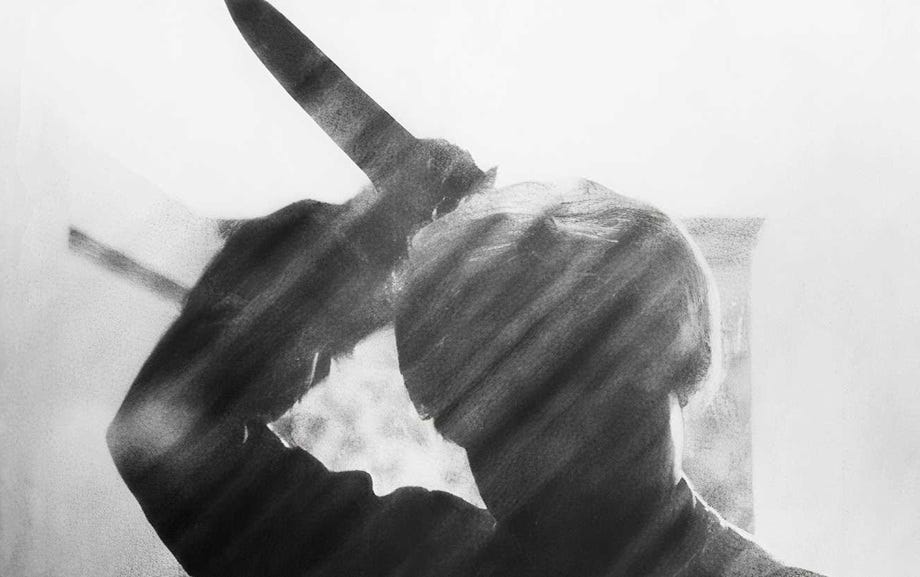
Psycho includes the most famous Terrible Moment in cinema history: the shower scene, the murder of Janet Leigh. Hitchcock leads you to believe that she is the protagonist of the movie and that you are going to follow her story, but her story ends brutally 30 minutes into the movie. From that point onward, it is really Norman Bates’ movie, although you don’t fully realize that until the final twist.
A Quiet Place opens with a genuinely brutal Terrible Moment, the death of the little boy. This shocking scene establishes the danger of the alien threat in a way that is both heartbreaking and highly effective.
Alien’s chest-bursting scene introduces its monster in the most in-your-face method possible: a body horror moment that builds on the previous body horror with pain and an explosion of gore. And it does so in the midst of the most mundane and threat-free setting you could imagine: lunch.
I couldn’t think of any literary mid-story Terrible Moments; if you can, please share.
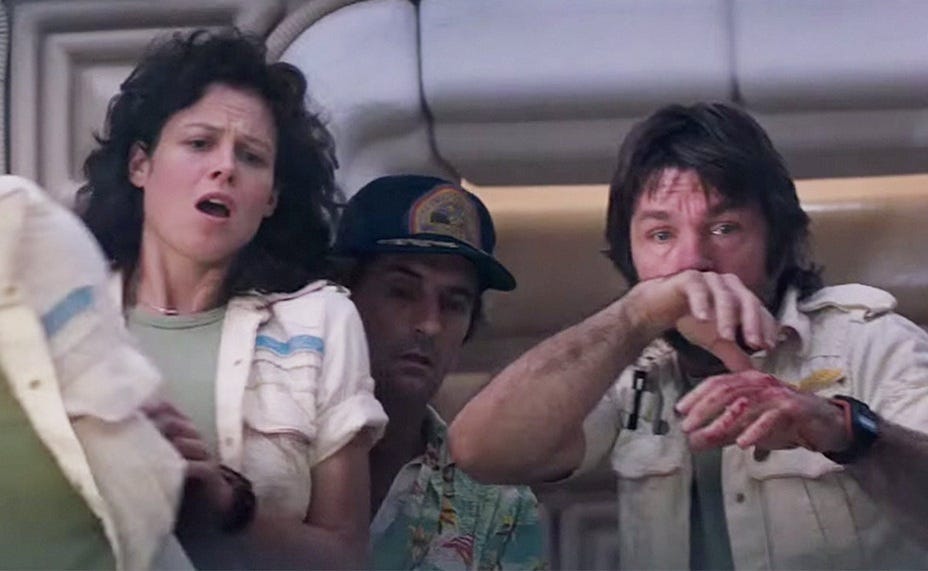
With his cannot and should not, I am certain Hammett was referring a build-up that led to a story’s conclusion. But by building dread and tension that leads to a mid-story Terrible Moment’s release, the artist creates a new level in the story, with new possibilities. For instance, the chest-bursting scene in Alien turns the story from a mystery into a fight for survival, with increasingly harrowing encounters with the title monster. This model is repeated in Rec’s Terrible Moment, where the firefighters and TV crew are investigating a mystery in an apartment building until a body plummets multiple floors to smash into the lobby floor. From that point on, it’s a claustrophobic zombie movie.
I believe that The Texas Chainsaw Massacre is the greatest horror movie of all time because it creates an atmosphere of dread from its opening frames – the scenes in the desecrated cemetery – and sustains dread and horror and terror for nearly every minute of its run time. It follows Hammett’s dictum of the sense of something that cannot be by gradually immersing the teenagers into the bizarre, horrific world inside the farmhouse. Then, when most of them are brutally slain and the last girl is dragged into the psychotic dinner scene, the should-not be rears its awful head. That scene, which drags on and on, was set up by the Terrible Moments that shattered the last remnants of normalcy in the world of the victims.
Whether a Terrible Moment ends a story, opens a story, or blows up expectations in the middle, it’s a powerful writer’s tool that doesn’t exist in many other genres. (The Thriller, for sure) If you believe, as I do, that the primary obligation of a horror story is to subvert reality and tap into the audience’s deepest fears, then building dread and suspense that leads to a powerful moment of dislocation is the basic formula to follow. The advantage of a mid-story Terrible Moment is that it opens up opportunities to misdirect (as Hitchcock did in Psycho) or to change the direction of the story. But above all, it should make the viewer think: “That cannot or should-not be.”