
Shudder Pulps
Lurid, violent, and popular
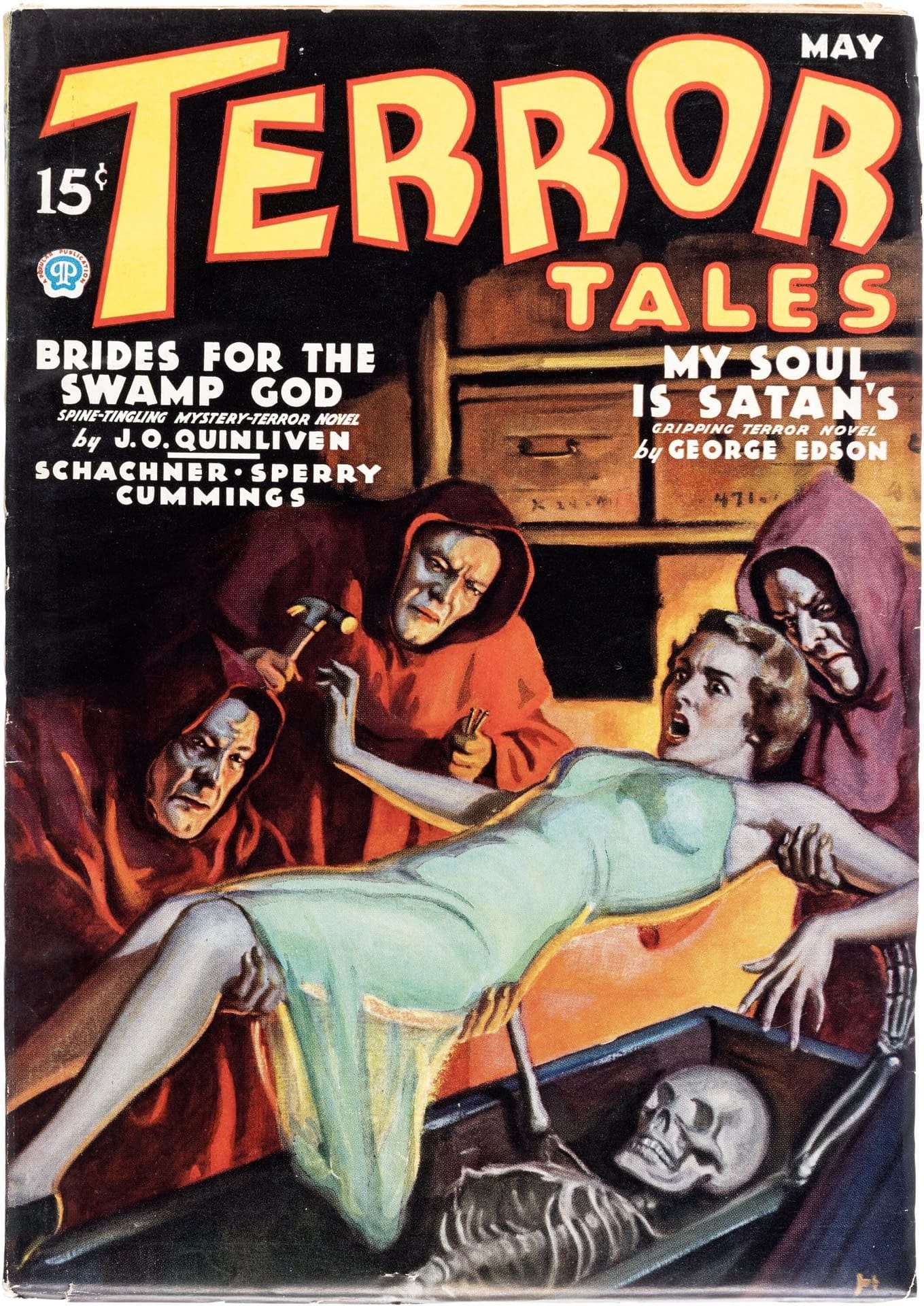
Throughout most of the classic pulp magazine era, approximately 1920 to 1950, horror found its place alongside boxing stories, romance, science fiction, and Western stories.
The legendary Weird Tales emerged in 1923, providing a platform for some of the most important modern era horror writers, from H.P. Lovecraft to Robert Bloch to Ray Bradbury. Weird Tales, as important as it was, was never hugely successful. It struggled to survive for most of its original existence. For most of the 30s and 40s, it was the ‘shudder pulps’ that provided mass entertainment for horror fans.
The shudder pulp format was born in 1933 when Dime Mystery Magazine dropped its standard detective fiction format in favor of a novel refinement of the horror story. Sales for the title had been anemic, so publisher Henry Steeger, taking inspiration from the Grand Guignol theater, shifted focus from gumshoes to torture and deformity.
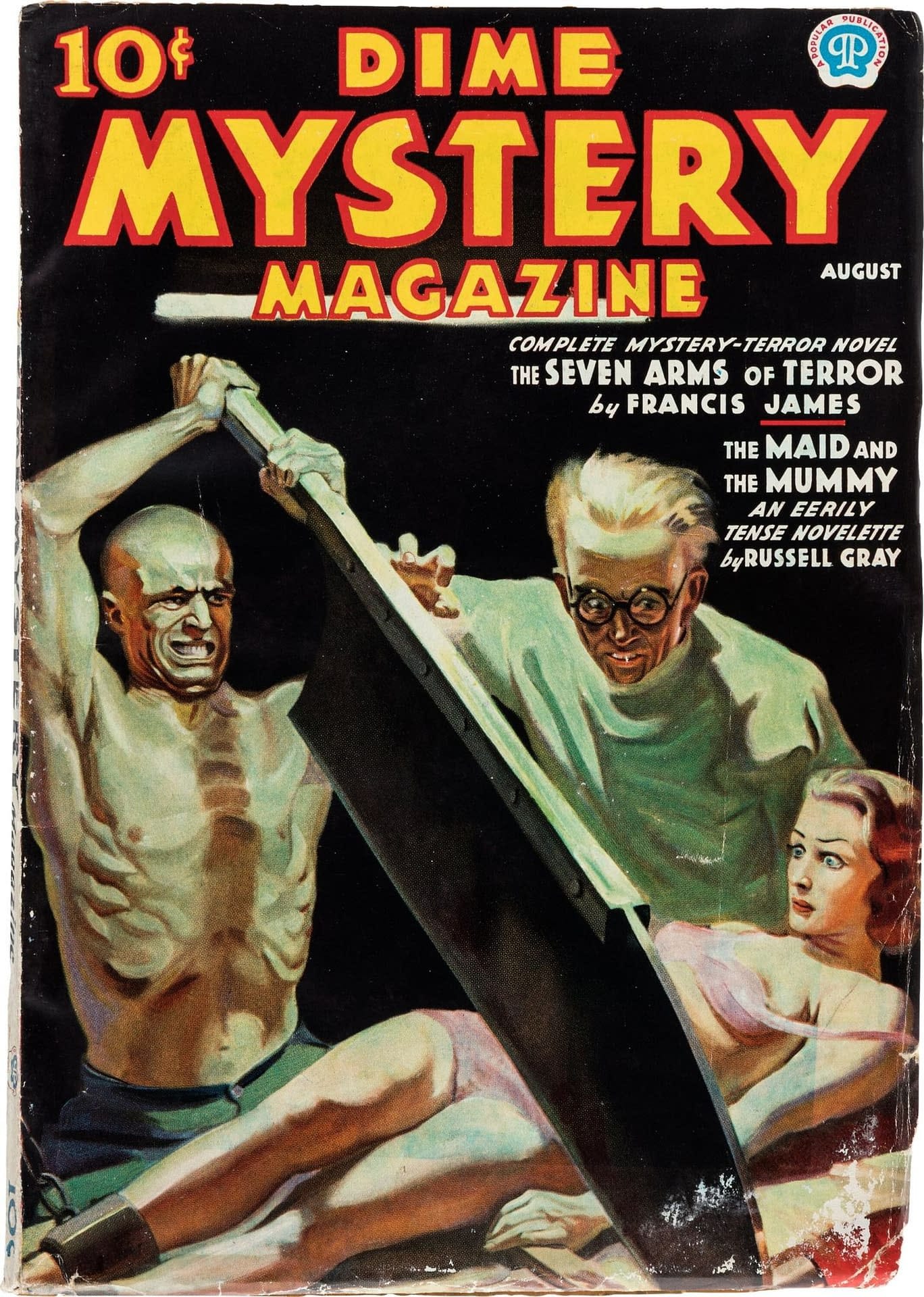
The covers gave away the game immediately. Typically, they portrayed a scantily clad beauty bound or shackled while grotesque figures loomed over them with instruments of death or torture. Hunchbacks, leering old men, monocled mad scientists, hooded cultists, clutching skeleton hands; all threatened their nubile victims with fates worse than death. Sometimes a stalwart hero was attempting to rescue the damsel, unaware that a shadowy figure was about to plunge a dagger into their back.
The shudder pulps were not unique in their use of women in peril to sell magazines. Nearly every other genre represented in the pulps featured similar covers and stories, though often of a less extreme nature. The shudder pulps usually won the bad taste contest.
Inside, a typical story offered a blend of ‘mystery and terror.’ In the early 1930s, the terms terror and horror were almost interchangeable. Horror sometimes indicated a higher level of physical fear, with terror standing in for psychological trauma. But in the pulps, such fine distinctions were often blurred. What terror stood for in Dime Mystery Magazine was Weird Menace: threatening figures that resembled supernatural horrors. Ghouls, zombies, mummies, ghosts, or vampires.
But the lurid titles like “Spawn of the Slime” and the creepy covers were misleading. The trick was that in every single case, at the end, the weird menace was revealed to be human, usually some evil character trying to scare someone so they could profit somehow.
Yes, that’s the Scooby-Doo formula, too.
I tried to find any connection between the creators of Scooby-Doo and the Shudder Pulps, but I struck out. Maybe one of them found a stack of their Dad’s old pulps in the attic.
At first, Dime Mystery Magazine soft-pedaled the sadism. But as other publishers got into the act and as competition for readers increased, the inevitable downward escalation occurred. The ladies on the covers wardrobes grew scantier, and the horrors inside progressed from menace to actual torture. Characters were killed horribly, disfigured, made insane, and more. But the Shudder Pulp formula stubbornly stuck with revelations of non-supernatural villains.
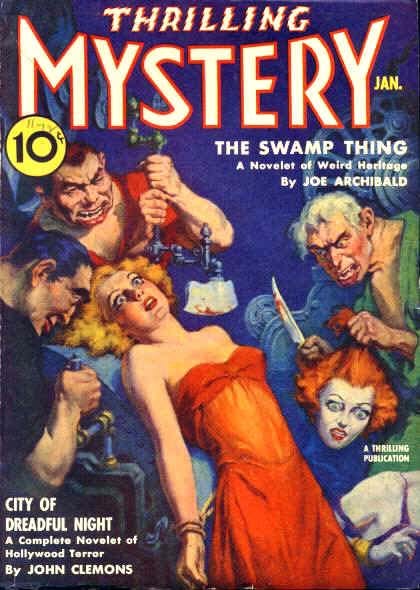
While a handful of the Weird Tales veterans slummed in the Shudder Pulps, the magazines themselves never sprouted out literary prodigies, as the standard mystery magazines did. There were no Dashiell Hammetts or James M. Cains emerging from the swamps of the Shudder Pulps.
This was significant for the development – or lack thereof - of the horror film. As I’ve pointed out in numerous previous posts, hard-boiled crime writers provided the foundation for Hollywood crime films, either through adaptations of their works or direct employment. The whole of Film Noir would never have emerged were it not for all the hard-boiled crime writers of the 1930s.
The horror films of this period did not benefit from a similar trove of material. Nearly all the writing in the genre at the time, certainly in the pulps, was limited to short stories and novellas. Even the most popular horror writers were obscure in the wider culture. They certainly escaped the notice of Hollywood. As a result, you didn’t have top writers, people like Raymond Chandler or W. R. Burnett, scripting horror movies.
This helps to explain why horror remained segregated in a disreputable corner of popular culture for so long. Those nasty shudder pulp covers didn’t help.
That doesn’t mean that the Shudder Pulps lacked any influence on movies. Numerous B-Movies and Poverty Row productions borrowed the tropes and formula of the mad scientist creating weird menace. Studio examples include: The Raven (1935) The Return of Dr. X (1939) The Monster and the Girl (1941). Poverty Row efforts include: The Ape (1940) The Devil Bat (1940) The Corpse Vanishes (1942). These movies, in turn, helped to keep the weird menace tropes alive as the shudder pulps began to dwindle. These tropes would re-appear in the crime and horror comics of the late 1940s and 1950s.
Horror movie fans had to wait all the way until the 1960s before an influx of quality writers and adaptations of quality literary works entered the field. Writers like Robert Bloch, Dennis Wheatley. or Richard Matheson helped to develop the modern horror novel. Some of those books were adapted into films. Truman Capote was brought in to adapt Henry James’ Turn of the Screw. Hollywood adapted writers like Shirley Jackson and Ira Levin.
The quality of horror films grew along with this new connection to literary quality. The explosion of the horror novel in the 1970s paralleled the increased popularity of the horror film; it’s interesting to consider which form influenced which.
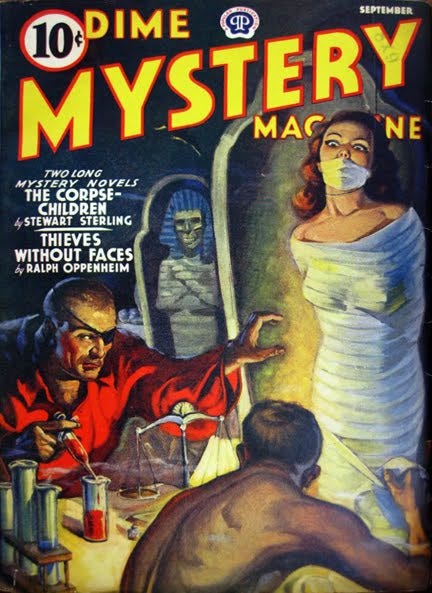
I’ll discuss these developments further in future posts. Meanwhile, here’s one more ridiculously menacing shudder pulp cover:
I am greatly indebted to Robert Kenneth Jones exhaustive history of the genre: The Shudder Pulps for the research for this article.
I had never thought of it, but you're right about the seemingly supernatural villains in Scooby Doo always turning out to be humans. The only actual supernatural element to the show was Scooby himself. Maybe that explains the gang's credulity. Since they know talking animals exist, it's possible that ghosts do, too.